


Out of all the platforms out there, Facebook really shines when it comes to connecting with customers. But managing Meta Ads for Facebook isn’t as simple as throwing a couple of ads together. It takes strategy and knowing your way around the tools. In this guide, we’ll break down the basics of Facebook Ads management, giving you all the tips and tricks you need to make the most of your ads. Let’s start at the beginning.
What is Meta Business Suite?
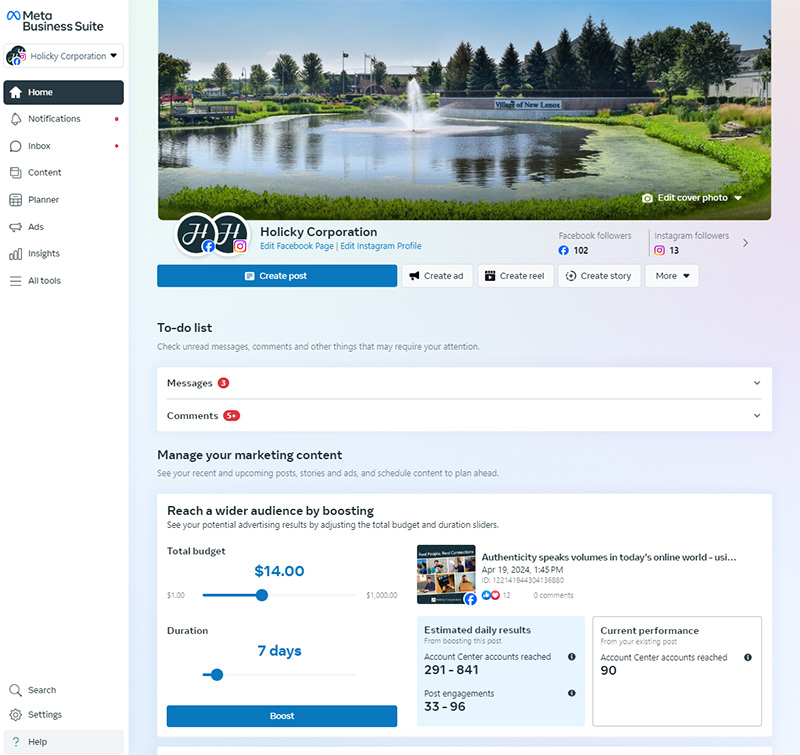
Meta Business Suite is a platform developed by Meta (formerly known as Facebook). It allows businesses to manage their presence across Facebook, Instagram, and Messenger. It provides tools for scheduling and publishing content, responding to messages and comments, accessing insights and analytics, and managing advertising campaigns. Essentially, it’s a centralized hub for businesses to streamline their social media marketing efforts and engage with their audience effectively.
Getting Started with Facebook Ads Management
- Define Your Campaign Objectives: Before diving into the ad creation process, it’s crucial to define clear objectives for your campaign. Whether you aim to drive website traffic, generate leads, or increase conversions, aligning your objectives with your overarching goals is essential for success.
- Target Your Audience Effectively: Facebook’s robust targeting capabilities allow you to narrow down your audience based on demographics, interests, behaviors, and more. By honing in on the users most likely to engage with your ads, you can maximize the effectiveness of your campaigns and optimize your advertising budget.
- Craft Compelling Ad Creative: The visual and textual components of your ads play a pivotal role in capturing the attention of your audience. Experiment with different ad formats, such as images, videos, or carousel ads, and ensure that your ad copy resonates with your target audience’s needs and interests.
- Monitor and Optimize Campaign Performance: Launching your ad campaign is just the beginning. Regularly monitor key metrics such as reach, engagement, and conversion rates to gauge the effectiveness of your ads. Use this data to refine your targeting, adjust your bidding strategy, and optimize your ad creative for better results over time.
Tips for Effective Facebook Ads Management
- Consider Hiring Professional Services: If managing your Facebook ad campaigns feels overwhelming or time-consuming, consider outsourcing the task to experienced pay-per-click advertising professionals. Working with a reputable digital marketing agency can free up your time. It also ensures that your campaigns are expertly crafted for maximum impact.
- Embrace Retargeting for Higher Conversions: Don’t overlook the power of retargeting ads to re-engage users who have shown interest in your brand but haven’t converted yet. By serving personalized ads to these prospects, you can increase conversion rates and drive more value from your advertising efforts.
- Prioritize Mobile-Friendly Ad Content: Given the prevalence of mobile usage, optimizing your ad content for mobile devices is crucial. Ensure that your ads are visually appealing and easy to consume on smaller screens. Don’t forget to leverage video content to capture the attention of mobile users.
- Combat Ad Fatigue with Fresh Content: To prevent your audience from tuning out your ads due to repetition, regularly refresh your ad creative and messaging. Monitoring ad performance and adjusting your content accordingly can help maintain engagement and prevent ad fatigue over time.
Advanced Strategies for Facebook Ads Management
As you become more proficient in Facebook Ads management, you’ll want to explore advanced strategies to further enhance your campaigns’ effectiveness.
-
Implementing A/B Testing to Optimize Ad Performance
A/B testing, also known as split testing, involves running multiple variations of your ads to determine which performs best. You can test different elements such as ad copy, imagery, targeting options, and calls-to-action. By analyzing the results, you can identify the most effective ad components and refine your campaigns for maximum impact.
-
Leveraging Dynamic Ads for Personalized Targeting
Dynamic ads automatically show the most relevant products or content to users based on their browsing behavior or interactions with your website or app. These highly personalized ads can significantly increase engagement and conversions by showcasing products or services tailored to each user’s interests and preferences.
-
Exploring Advanced Targeting Options
Facebook offers advanced targeting options that allow you to reach highly specific audiences with your ads. Lookalike audiences let you target users who share similar characteristics to your existing customers. While custom audiences enable you to target users based on their interactions with your business, such as website visits or email sign-ups. By leveraging these advanced targeting options, you can refine your audience segmentation and deliver more relevant ads to potential customers.
-
Harnessing the Power of Messenger Ads for Personalized Conversations
Messenger ads provide businesses with a unique opportunity to initiate conversations with potential customers directly within the Messenger platform. Unlike traditional ads, which direct users to a landing page or website, Messenger ads allow you to engage users in personalized conversations in real-time. By leveraging Messenger ads, you can answer questions, provide assistance, and nurture leads through one-on-one conversations with users. This personal touch can help build trust and rapport with potential customers, ultimately driving engagement and conversions.
Messenger ads are particularly effective for driving engagement and facilitating conversions, as they provide users with a direct line of communication to your business. By engaging users in personalized conversations, you can address their specific needs and concerns, guiding them towards the desired action more effectively.
-
Exploring Cross-Channel Integration for Holistic Marketing Campaigns
Cross-channel integration involves coordinating and synchronizing your marketing efforts across multiple channels, including Facebook, Instagram, email, and other digital platforms. Rather than operating in silos, cross-channel integration allows you to create cohesive and consistent messaging. That will reinforce your brand identity and messaging. By integrating your Facebook Ads with other marketing channels, you can reach users at various touchpoints throughout their journey, increasing brand visibility and engagement.
For example, you might use Facebook Ads to drive traffic to your website. Users can then sign up for your email list and receive targeted email campaigns. Cross-channel integration enables you to create holistic marketing campaigns. They deliver a seamless and cohesive experience for users across all channels. By coordinating your efforts and delivering consistent messaging, you can maximize the impact of your marketing campaigns and drive better results across the board.
Overcoming Common Challenges in Facebook Ads Management
Despite its many benefits, Facebook Ads management can present challenges that marketers must overcome to achieve success.
-
Dealing with Ad Disapprovals and Policy Violations
Facebook has strict ad policies governing the content and format of ads displayed on its platform. Ad disapprovals and policy violations can occur if your ads contain prohibited content or fail to comply with Facebook’s guidelines. To avoid these issues, familiarize yourself with Facebook’s ad policies and guidelines and ensure that your ads adhere to them.
-
Addressing Issues with Ad Delivery and Reach
Factors such as ad relevance, audience targeting, and bidding strategy can impact your ad’s delivery and reach. If your ads are not reaching their intended audience or are not delivering the desired results, consider adjusting your targeting parameters, refining your ad creative, or optimizing your bidding strategy to improve performance.
-
Troubleshooting Tracking and Conversion Attribution Problems
Accurately tracking and attributing conversions to your Facebook ads is essential for measuring campaign effectiveness and ROI. Common issues such as pixel implementation errors, cross-device tracking challenges, and attribution modeling discrepancies can complicate conversion tracking efforts. Work closely with your technical team or digital marketing partners to troubleshoot and resolve any tracking issues to ensure accurate measurement of campaign performance.
Measuring Success and ROI in Facebook Ads Management
Effectively measuring success and ROI is critical for evaluating the performance of your Facebook ad campaigns and optimizing future efforts.
-
Identifying Key Performance Indicators (KPIs) for Tracking Ad Effectiveness
Key performance indicators (KPIs) such as click-through rate (CTR), conversion rate, cost per acquisition (CPA), and return on ad spend (ROAS) provide valuable insights into the performance of your Facebook ad campaigns. Identify the most relevant KPIs based on your campaign objectives and use them to track ad effectiveness and measure success.
-
Analyzing Ad Performance Metrics and Interpreting Insights
Regularly monitor and analyze ad performance metrics to identify trends, patterns, and areas for improvement. Pay attention to metrics such as impressions, clicks, engagement, and conversion actions to gauge the effectiveness of your ads. Use these insights to refine your targeting, optimize your ad creative, and adjust your bidding strategy for better results.
-
Calculating Return on Ad Spend (ROAS) and Evaluating Overall Campaign ROI
Return on ad spend (ROAS) measures the revenue generated from advertising relative to the amount spent on ads. According to a recent article by DashThis, a good ROAS is 3x on average. This means for every dollar spent on ads, it should generate three times that amount in revenue. Calculate ROAS by dividing the total revenue generated from ads by the total ad spend. Evaluating ROAS allows you to assess the profitability of your Facebook ad campaigns. It helps you determine their overall return on investment (ROI). Use ROAS as a benchmark for evaluating campaign performance and allocating budget resources effectively.
To wrap up, mastering Facebook Ads management is an ongoing journey that requires continuous learning and optimization. By leveraging the powerful tools, like Meta Business Suite and strategies outlined in this guide, you can elevate your advertising efforts and achieve tangible results for your business. Ready to take your Facebook advertising to the next level? Start implementing these tips today and watch your campaigns soar.

About the Author
Jason Holicky is the founder of Holicky Corporation, a successful marketing agency in New Lenox, Illinois. With over 25 years of experience, he specializes in marketing consulting, website development, corporate photography, video editing, and social media management. Jason is passionate about helping businesses thrive, generate leads, and stay updated with current marketing methods and technology trends. He is a certified Google Ads expert and AppDirect technology advisor.
Related Posts




Ready to Elevate Your Online Presence? Let’s Get Started!
Take the first step towards a robust online website system with our expert web development services. Whether you’re looking to create a custom website, build a scalable Content Management System, or develop seamless APIs, our team is here to bring your vision to life. Contact us today to discuss your project and discover how our custom solutions can transform your online platform.