


In this article, we delve into the details of selecting PPC keywords. These keywords will not only attract clicks but also convert those clicks into valuable leads or sales. We recognize that the sheer volume of keywords available can be overwhelming. That can make it challenging to identify the ‘right’ ones that will give you the best results for your campaign. Therefore, our goal is to offer guidance to navigate the process of keyword selection with confidence. We’ll provide actionable insights to help you maximize the impact of your PPC campaigns and achieve your conversion goals.
PPC keywords serve as the bridge between user intent and your ad campaign. They are the words and phrases that potential customers type into search engines when looking for your products or services. Essentially, selecting PPC keywords, also known as keyword research, is the cornerstone of any successful pay-per-click campaign. They will directly impact your ad’s visibility, relevance, and ultimately, its effectiveness in driving conversions.
Understanding PPC Keywords
A Definition and Overview of PPC Advertising
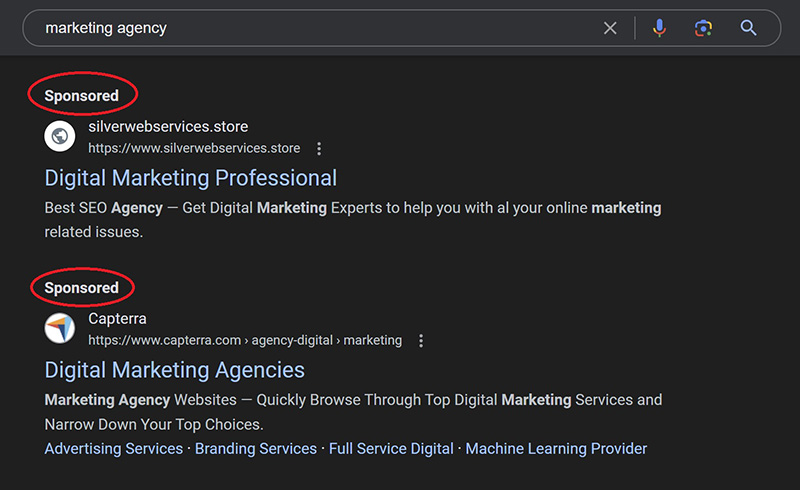
PPC, or Pay-Per-Click advertising, is a digital marketing model where advertisers pay a fee each time their ad is clicked. It’s a way of buying visits to your site rather than attempting to earn those visits organically. PPC ads typically appear at the top or bottom of search engine results pages (SERPs). They also may show as on various websites and social media platforms. Advertisers bid on keywords relevant to their target audience, and when users search for those keywords, the ads are displayed. PPC advertising offers a highly measurable and cost-effective way to drive targeted traffic to your website. That makes it a popular choice for businesses looking to increase their online visibility and generate leads or sales.
The Role of Keywords in PPC Campaigns
Keywords are the words or phrases that users enter into search engines when looking for information, products, or services online. In the context of PPC campaigns, keywords play a crucial role in determining when and where your ads will appear. Advertisers select relevant keywords that align with their offerings and target audience. When users search for those keywords, the ads are triggered to display. Keywords help advertisers reach their desired audience at the right moment, ensuring that their ads are seen by users actively searching for what they have to offer. Effective keyword selection is essential for maximizing the performance and effectiveness of PPC campaigns. It directly impacts ad targeting, relevance, and ultimately, the likelihood of driving conversions.
Maximizing ROI by selecting the Right Keywords
Selecting the right keywords is paramount for maximizing the return on investment (ROI) of PPC campaigns. Advertisers, like you, can ensure that their ads are shown to users who are actively searching for their products or services. You can do this by targeting the most relevant and high-intent keywords. This increases the likelihood of clicks and conversions, ultimately driving a higher ROI.
Conversely, targeting irrelevant or low-performing keywords can result in wasted ad spend and poor campaign performance. Therefore, thorough keyword research and analysis are essential for identifying the most effective keywords for your campaign objectives. Advertisers can optimize their PPC campaigns for maximum ROI and achieve their business goals more effectively. They do this by focusing on the keywords that are most likely to drive conversions.
Conducting Keyword Research
The Importance of Thorough Keyword Research
Thorough keyword research is the cornerstone of any successful digital marketing strategy, particularly in the realm of PPC advertising. It’s the process of identifying and analyzing the words and phrases that potential customers use when searching for products or services online. By understanding the language and intent behind these searches, businesses can effectively target their audience and tailor their content and advertising campaigns to meet their needs.
Thorough keyword research helps businesses discover high-intent keywords with the potential to drive conversions. It also provides valuable insights into market trends, competitor strategies, and consumer behavior. Ultimately, investing time and effort into comprehensive keyword research lays the foundation for maximizing ROI.
Tools and Methods for Conducting Keyword Research
Conducting keyword research can be a daunting task, given the vast array of words and phrases used by consumers across different industries and niches. Fortunately, there are numerous tools and methods available to streamline the process and uncover valuable insights. Popular tools like Google Keyword Planner, SEMrush, and SpyFu provide access to vast databases of keyword data, allowing businesses to identify relevant keywords, assess their search volume and competition, and uncover new keyword opportunities. These tools often offer advanced features such as keyword suggestion, competitor analysis, and trend tracking, enabling businesses to refine their keyword strategy and stay ahead of the curve.

Additionally, methods such as analyzing customer feedback, monitoring social media discussions, and studying industry publications can provide valuable qualitative insights into the language and preferences of your target audience. By leveraging a combination of tools and methods, businesses can conduct thorough keyword research and develop highly targeted and effective PPC campaigns that resonate with their audience.
Strategies for Identifying Relevant Keywords
Identifying relevant keywords for your niche or industry requires a strategic approach that takes into account various factors such as audience demographics, search intent, and the competitive landscape. One effective strategy is to start by brainstorming a list of core topics and themes related to your products or services, then expanding upon these topics to identify specific keywords and phrases.

Additionally, analyzing competitor websites and advertising campaigns can provide valuable insights into the keywords they are targeting and the messaging they are using to attract customers. Leveraging long-tail keywords—more specific and less common search queries—can also be an effective way to reach highly targeted audiences with less competition. Furthermore, considering modifiers such as location, product attributes, and buyer intent can help further refine your keyword list and ensure relevance to your target audience. By employing a combination of these strategies, businesses can identify the most relevant keywords for their niche or industry and develop PPC campaigns that resonate with their audience and drive results.
Evaluating Keyword Performance
Key Metrics for Evaluating Keyword Performance
Evaluating keyword performance is essential for optimizing the effectiveness of your PPC campaigns and maximizing ROI. Key metrics provide valuable insights into how well your keywords are performing and help you make informed decisions about your advertising strategy. Metrics such as click-through rate (CTR), conversion rate, and cost per conversion are particularly important in assessing keyword performance. CTR measures the percentage of users who click on your ad after seeing it, indicating how compelling your ad is to your target audience.
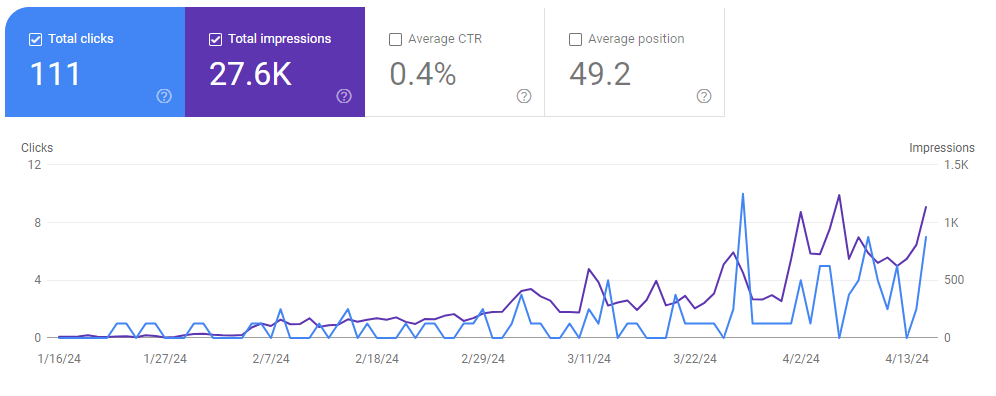
Conversion rate measures the percentage of clicks that result in a desired action, such as a purchase or sign-up, providing insight into the effectiveness of your keywords in driving conversions. Cost per conversion measures the average cost incurred for each conversion, helping you understand the efficiency and profitability of your advertising efforts. By tracking and analyzing these key metrics, you can identify high-performing keywords, optimize your bidding strategy, and allocate your budget more effectively to achieve your campaign objectives.
The Importance of Analyzing Keyword Data
Analyzing keyword data is crucial for identifying top-performing keywords and optimizing the performance of your PPC campaigns. Keyword data provides valuable insights into how users are searching for your products or services, allowing you to tailor your advertising strategy to meet their needs effectively. By analyzing metrics such as search volume, competition level, and user intent, you can identify keywords with the highest potential to drive traffic and conversions. Additionally, analyzing keyword data over time allows you to track trends, identify emerging opportunities, and adapt your strategy accordingly. By continuously monitoring and analyzing keyword data, you can stay ahead of the competition, optimize your keyword targeting, and maximize the effectiveness of your PPC campaigns.
Tracking and Analyzing Keyword Performance
Tracking and analyzing keyword performance is made easier with the help of a variety of tools and techniques designed specifically for this purpose. Tools like Google Analytics, Google Ads, and third-party analytics platforms provide comprehensive data on keyword performance, including metrics such as impressions, clicks, conversions, and more. These tools allow you to track the performance of individual keywords, ad groups, and campaigns, enabling you to identify trends, pinpoint areas for improvement, and make data-driven decisions about your advertising strategy. Techniques such as segmentation, filtering, and custom reporting further enhance your ability to analyze keyword performance and derive actionable insights. You can gain a deeper understanding of how your keywords are performing by leveraging these tools and techniques. You can also optimize your campaigns for maximum impact, and achieve your business objectives more effectively.
Choosing the Right Keywords
Criteria for Selecting Effective Keywords in PPC Campaigns
Selecting the most effective keywords for your PPC campaigns requires careful consideration of several criteria to ensure optimal performance and return on investment (ROI). Key factors to consider include relevance, search volume, competition, and commercial intent. Relevance is paramount, as your keywords should closely align with the products or services you offer and the needs of your target audience. High search volume indicates demand for a particular keyword but may also mean increased competition. Evaluating keyword competition helps you gauge the difficulty of ranking for a keyword and adjust your bidding strategy accordingly. Additionally, assessing commercial intent—whether a keyword indicates an intent to purchase—can help you prioritize keywords that are more likely to lead to conversions. By considering these criteria in tandem, you can identify the most effective keywords to maximize the success of your PPC campaigns.
The Importance of Long-Tail Keywords and Niche-Specific Terms
While broad keywords may attract a large audience, targeting long-tail keywords and niche-specific terms can offer significant advantages in PPC campaigns. Long-tail keywords are more specific and less competitive than broad keywords, making it easier to rank for them and attract highly targeted traffic. By targeting long-tail keywords, you can reach users who are further along in the purchasing process and more likely to convert. Niche-specific terms, on the other hand, allow you to tailor your messaging to a highly targeted audience with specific interests or needs. These terms often have lower competition and higher conversion rates, making them valuable assets in your PPC strategy. By incorporating long-tail keywords and niche-specific terms into your campaigns, you can increase relevancy, improve ad performance, and ultimately drive more conversions.
Strategies for Prioritizing Keywords Based on Conversion Potential
It is essential to prioritize keywords based on their potential impact on conversions. You want to optimize the performance of your PPC campaigns to achieve your business goals. One effective strategy is to focus on keywords with high commercial intent. Those that indicate an intent to purchase or take a specific action. These keywords are more likely to lead to conversions and should be prioritized in your bidding strategy.
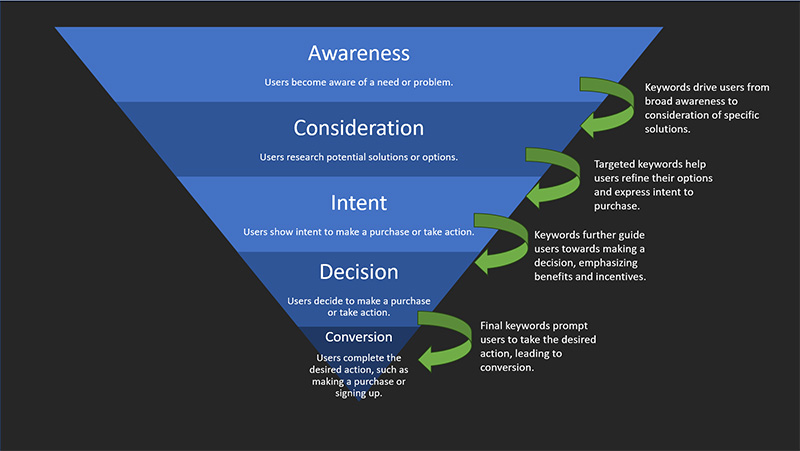
This Conversion Funnel illustrates how keywords guide users through the stages of the buyer’s journey, ultimately leading to conversion. By targeting the right keywords at each stage, businesses can effectively nurture leads and drive sales.
Additionally, analyzing historical data and performance metrics can help you identify keywords. Those keywords that have consistently driven conversions in the past and allocate your budget accordingly. Implementing A/B testing and experimentation allows you to test different keyword variations and strategies. Then identify the most effective ones for driving conversions. You can maximize the impact of your PPC campaigns and drive measurable results for your business. You’ll do this by prioritizing keywords based on their conversion potential and continuously refining your strategy.
Optimizing Keyword Selection
Techniques for Optimizing Keyword Selection Over Time
Your keyword selection strategy must evolve as things change to ensure the continued success of your PPC campaigns. Incorporating techniques for optimizing keyword selection over time is essential for staying ahead of the competition and maximizing ROI. A/B testing allows you to experiment with different keywords, ad copy, and landing pages to determine which combinations yield the best results. By systematically testing variations and analyzing performance metrics, you can refine your keyword selection strategy and identify opportunities for improvement.
Additionally, effective negative keyword management is crucial for eliminating irrelevant traffic. They will ensure that your ads are shown to the most qualified audience. Regularly reviewing search terms reports and adding negative keywords to your campaign helps minimize wasted spend. This will improve overall campaign performance. You can maintain a competitive edge and drive sustained success in your PPC campaigns. You’ll do this by implementing these techniques and continually iterating on your keyword selection strategy.
The Importance of Ongoing Keyword Optimization
While selecting the right keywords is critical for launching successful PPC campaigns, ongoing keyword optimization is equally important for maintaining campaign performance and driving long-term results. The digital landscape is dynamic, with changes in user behavior, market trends, and competitor strategies occurring regularly. As such, regularly reviewing and optimizing your keyword selection ensures that your campaigns remain relevant and effective. You can adapt your keyword strategy to capitalize on emerging opportunities and address evolving challenges. You’ll do this by monitoring performance metrics, identifying trends, and staying abreast of industry developments.
Moreover, ongoing optimization helps you identify and capitalize on new keyword opportunities, refine bidding strategies, and improve ad targeting. All of which contribute to maximizing ROI and achieving campaign objectives. You can ensure that your PPC campaigns continue to deliver value and drive meaningful results over time. You’ll need to make keyword optimization an ongoing priority.
Conclusion
Recap of Essential Points on PPC Keyword Selection
In this article, we’ve explored the critical aspects of selecting the right PPC keywords to drive conversions and maximize ROI. We discussed the importance of thorough keyword research, emphasizing criteria such as relevance, search volume, competition, and commercial intent. Additionally, we highlighted the significance of targeting long-tail keywords and niche-specific terms to reach highly targeted audiences. Strategies for analyzing keyword performance, optimizing keyword selection over time, and prioritizing keywords based on their conversion potential were also covered. You can enhance targeting precision, improve ad relevance, and ultimately drive more conversions. You’ll do this by incorporating these insights into your PPC campaigns.
Final Thoughts on Choosing the Right PPC Keywords
Selecting the right PPC keywords is more than just a tactical decision—it’s a strategic imperative for driving conversions and achieving business objectives. You can increase the likelihood of capturing their attention and motivating them to take action. You can do this by choosing keywords that are highly relevant to your audience and aligned with their search intent. Furthermore, optimizing keyword selection over time and prioritizing keywords based on their conversion potential. That allows you to continuously refine and improve the effectiveness of your PPC campaigns. Ultimately, the significance of choosing the right PPC keywords cannot be overstated—it’s the foundation upon which successful advertising campaigns are built, driving sustained growth and profitability for your business.
Applying Insights from Keyword Selection to Your PPC Campaigns
Now that you’ve learned from this article, the process of selecting the right PPC keywords requires careful consideration and ongoing optimization. It’s time to put these insights into action and apply them to your own PPC campaigns. Start by conducting thorough keyword research to identify relevant terms and phrases. These must align with your target audience and business objectives. Then, leverage tools and techniques for analyzing keyword performance and optimizing your keyword selection over time. Don’t forget to prioritize keywords based on their potential impact on conversions and regularly monitor and adjust your strategy as needed. By applying these best practices, you can enhance the effectiveness of your PPC campaigns. You’ll also drive more targeted traffic to your website, and ultimately boost conversions and grow your business.

About the Author
Jason Holicky is the founder of Holicky Corporation, a successful marketing agency in New Lenox, Illinois. With over 25 years of experience, he specializes in marketing consulting, website development, corporate photography, video editing, and social media management. Jason is passionate about helping businesses thrive, generate leads, and stay updated with current marketing methods and technology trends. He is a certified Google Ads expert and AppDirect technology advisor.
Related Posts




Ready to Elevate Your Online Presence? Let’s Get Started!
Take the first step towards a robust online website system with our expert web development services. Whether you’re looking to create a custom website, build a scalable Content Management System, or develop seamless APIs, our team is here to bring your vision to life. Contact us today to discuss your project and discover how our custom solutions can transform your online platform.